When we talk about quantum computing, one piece of infrastructure appears again and again: extreme cooling.
Modern quantum computing laboratories often contain large cryogenic systems designed to bring quantum processors to temperatures only fractions of a degree above absolute zero. These systems are sophisticated, expensive and essential to the operation of several leading quantum computing architectures.
But there is a question worth asking:
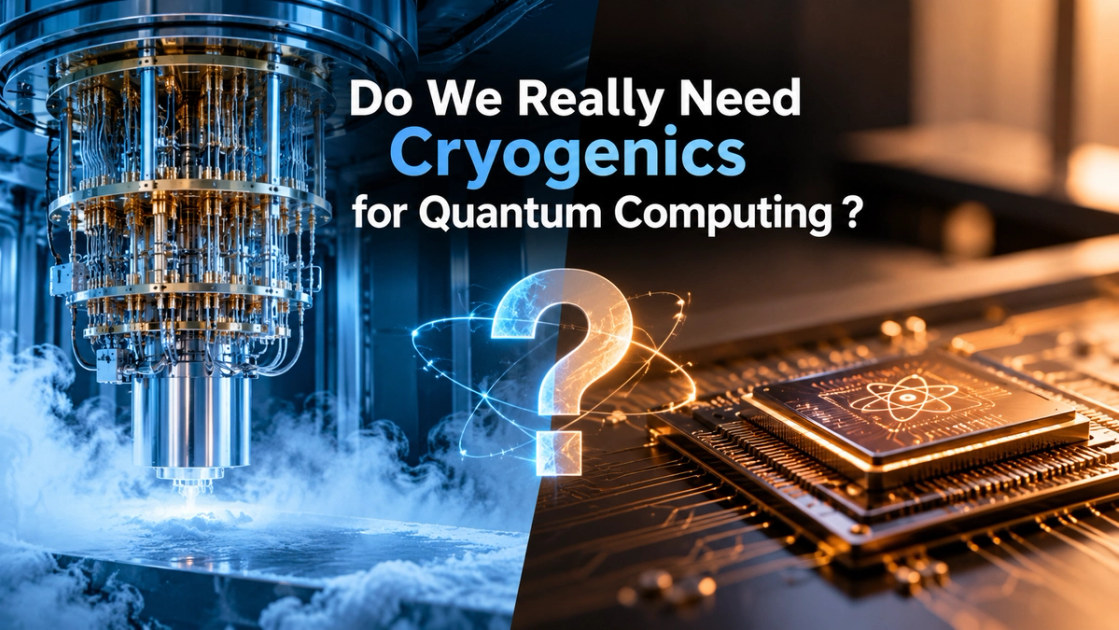
Do we actually need cryogenics for quantum computing?
Or have we reached a point where we are beginning to associate quantum computing with cryogenic temperatures simply because some of the most advanced quantum processors today depend on them?
The distinction is important.
Quantum computing is based on quantum mechanical behavior, not on low temperatures themselves. Cryogenic cooling is a way of creating the physical conditions required by particular implementations of quantum hardware. It is not, by itself, a fundamental requirement imposed by quantum mechanics.
Why Is Cryogenics Used in Quantum Computing?
The answer begins with the fragility of quantum states.
Quantum information is extremely sensitive to its environment. Unwanted interactions can disturb the quantum state and introduce errors. Thermal energy is one of the factors that can contribute to this problem.
For superconducting quantum computers, extremely low temperatures are particularly important because the processor relies on superconducting electrical circuits. These circuits need to operate under conditions where superconductivity can be maintained and thermal effects are sufficiently suppressed.
This is why dilution refrigerators have become such a recognizable part of quantum computing, even as researchers discover that cooling quantum systems is harder than it looks.
The refrigerator is not there simply because quantum computers are inherently cold machines.
It is there because the underlying hardware architecture requires those conditions.
That difference is fundamental.
Is Low Temperature a Requirement of Quantum Mechanics?
No.
There is nothing in the basic principles of quantum mechanics that says a quantum computer must operate at temperatures close to absolute zero.
Quantum phenomena can exist at a range of temperatures.
The real question is whether a particular quantum system can preserve, manipulate and measure useful quantum states reliably under those conditions.
This changes the question completely.
Instead of asking:
“How cold does a quantum computer need to be?”
we should ask:
“Does this particular quantum computing architecture require cryogenic conditions?”
For some architectures, the answer is yes.
For others, the answer may be no.
What Happens If We Remove Cryogenics?
Removing cryogenics sounds simple, but it creates a much more difficult engineering question.
If a quantum processor operates at higher temperatures, thermal energy becomes a more significant source of noise. Quantum states must still be generated, controlled and measured with sufficient precision.
The system must maintain coherence.
Errors must be managed.
Quantum operations must remain reliable.
The hardware must be engineered to prevent unwanted interactions from overwhelming the quantum information.
In other words, removing the refrigerator does not remove the fundamental challenges of quantum computing.
It changes where those challenges have to be solved.
This is why the idea of room-temperature quantum computing should not be interpreted as simply taking a cryogenic quantum processor out of its refrigerator.
The underlying architecture itself may need to be different.
Why Does This Question Matter?
Cryogenic infrastructure introduces another layer of complexity to quantum computing.
A quantum processor operating at extremely low temperatures needs a specialized environment around it. Cooling systems, thermal shielding, control electronics, wiring and other supporting infrastructure all become part of the overall system.
As quantum computers become larger, this creates an important scaling question.
If the quantum processor becomes increasingly powerful, how much additional infrastructure is required to operate it?
And at some point, does the infrastructure surrounding the processor become a significant limitation itself?
This is one of the reasons the question of cryogenics deserves more attention.
The future of quantum computing is not only about increasing the number of qubits.
It is also about making the entire computing architecture practical.
Could Quantum Computing Operate at Room Temperature?
Potentially, yes.
There are quantum computing approaches that do not fundamentally depend on maintaining the quantum processing system at temperatures close to absolute zero.
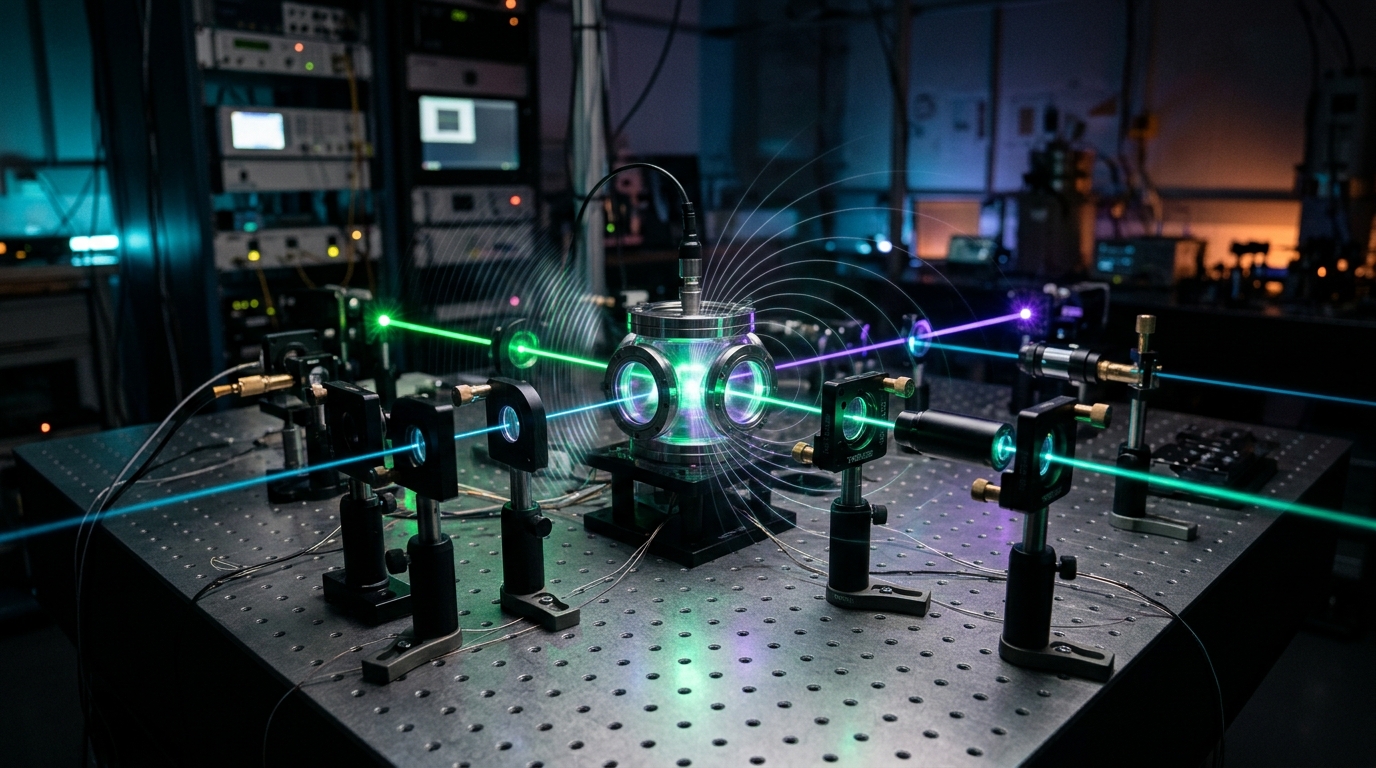
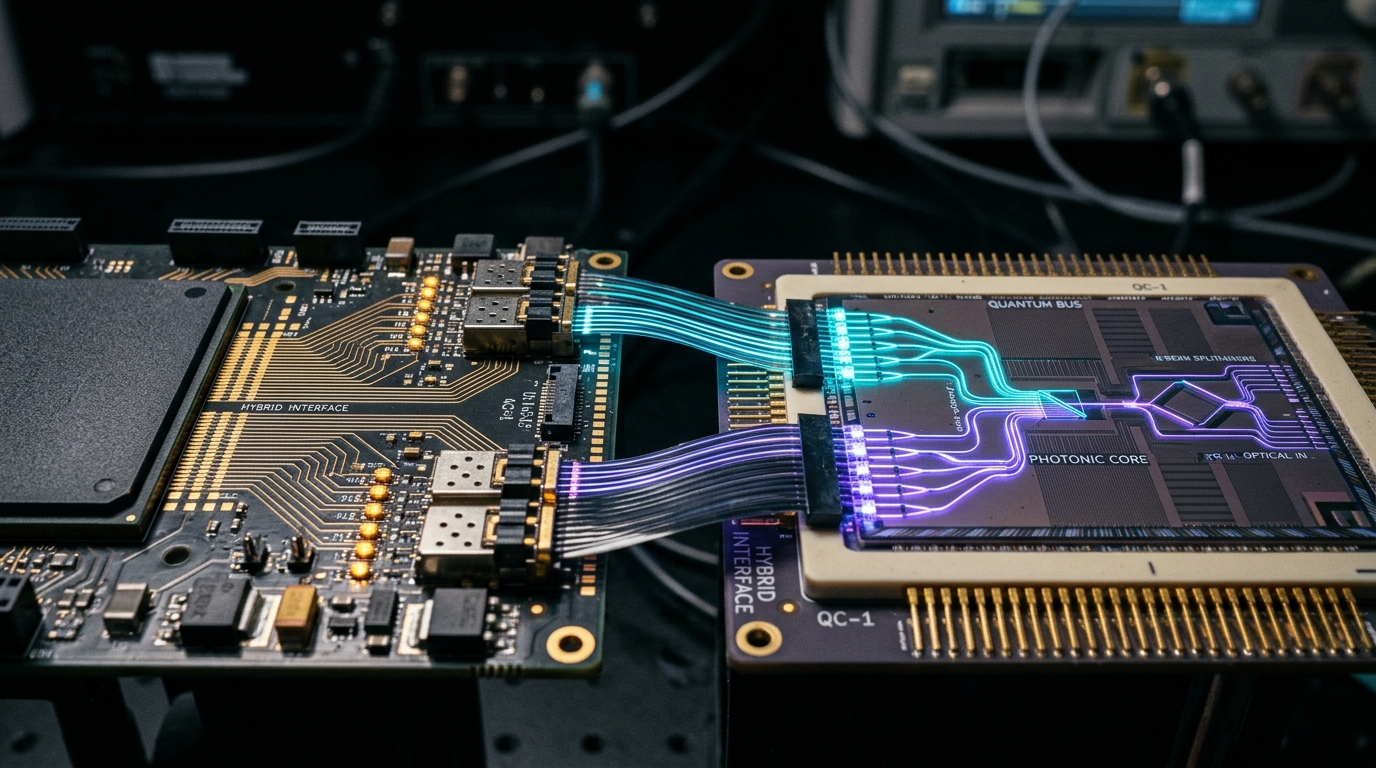
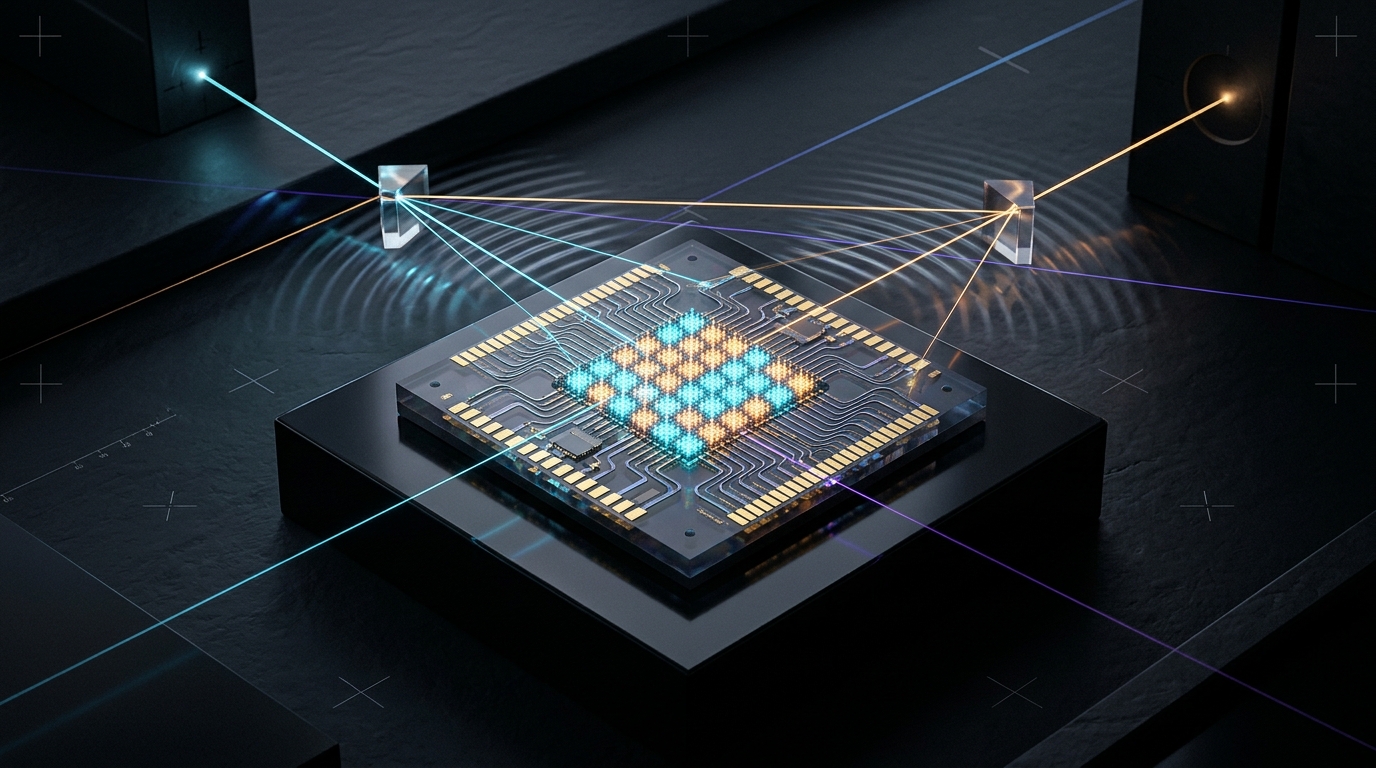
Photonic quantum computing is one example that has generated significant interest.
Photons can carry quantum information without requiring the same superconducting environment used by superconducting qubits. Optical systems can therefore open a different path toward quantum information processing.
But room-temperature quantum computing should not be presented as an easy alternative.
Operating without extreme cryogenic cooling introduces its own challenges.
The system still needs extremely precise control.
It still needs reliable quantum state generation.
It still needs high-quality measurement.
It still needs error correction.
And it still needs a scalable architecture.
The absence of cryogenics does not make quantum computing simple.
It simply removes one major physical constraint.
Are We Solving the Right Problem?
This may be the most important question.
For decades, researchers have worked to improve quantum processors while simultaneously improving the systems required to operate them.
That approach has produced remarkable progress.
But as quantum computers move toward larger and more practical systems, we need to examine the complete architecture.
A quantum computer is not just its qubits.
It is the processor, control system, measurement system, error correction architecture, classical computing infrastructure and physical environment working together.
If the quantum processor requires an extremely complex environment to function, that environment becomes part of the scalability problem.
This does not make cryogenic quantum computing a wrong approach.
It means that cryogenics should be viewed as an architectural choice rather than an unavoidable definition of quantum computing.
Do We Need Cryogenics or Do We Need Better Quantum Architectures?
This is where the discussion becomes more interesting.
Perhaps the future of quantum computing will continue to depend heavily on cryogenic systems.
Perhaps improvements in cryogenic engineering will make today’s architectures increasingly scalable.
But another possibility exists.
Perhaps future quantum computers will use architectures—such as room-temperature photonic quantum computing—where the core quantum processing can operate at much higher temperatures.
If that becomes practical, the consequences could extend beyond temperature.
It could change how quantum computers are designed, deployed and integrated with conventional computing infrastructure.
The question therefore is not whether cryogenics has been useful.
It unquestionably has.
The question is whether it has to remain essential.
The Question We Should Keep Asking
Cryogenic quantum computing has enabled some of the most important advances in the field.
It would be unreasonable to dismiss that achievement.
But scientific progress often begins by questioning assumptions that have become deeply embedded in an industry.
For quantum computing, one of those assumptions may be that powerful quantum processors must exist inside extremely cold environments.
Maybe they do.
Maybe they do not.
The answer will ultimately depend on whether alternative architectures can demonstrate the combination of quantum performance, stability, error correction and scalability required for useful computation.
That is the real test.
Quantum computing does not need to be cold simply because some quantum computers are cold.
Cryogenics may be a requirement of certain quantum computing architectures. It does not necessarily have to be a requirement of quantum computing itself.
And that leaves us with a question worth pursuing:
What could quantum computing look like if the refrigerator was no longer at the center of the architecture?